Fall Lawn Care is Special This Year
September has been a hard month on the ground. Across the Mid-Ohio Valley we have seen round after round of heavy rain — flash flooding in Mason County and neighboring Gallia and Meigs counties, closed roads, water rescues, and yards that sat under standing water longer than anyone wanted. Some spots took several inches in a short stretch. Other neighborhoods only got soaked. Either way, a lot of lawns are tired, matted, silted, or still too wet to work.
Fall is still the best season to help a cool-season lawn in this part of the country. That has not changed. What has changed is the order of the work. After this much rain, the first job is not fertilizer or seed. It is patience, a walk around the yard, and a few careful decisions about what the soil can take.
This is a neighbor-to-neighbor checklist for Mason, Gallipolis, Belpre, and the river towns around us. It is not a promise that every lawn will bounce back this month. Some will. Some will need a second look in spring. Start with what you can see.
Wait for the ground to tell you it is ready
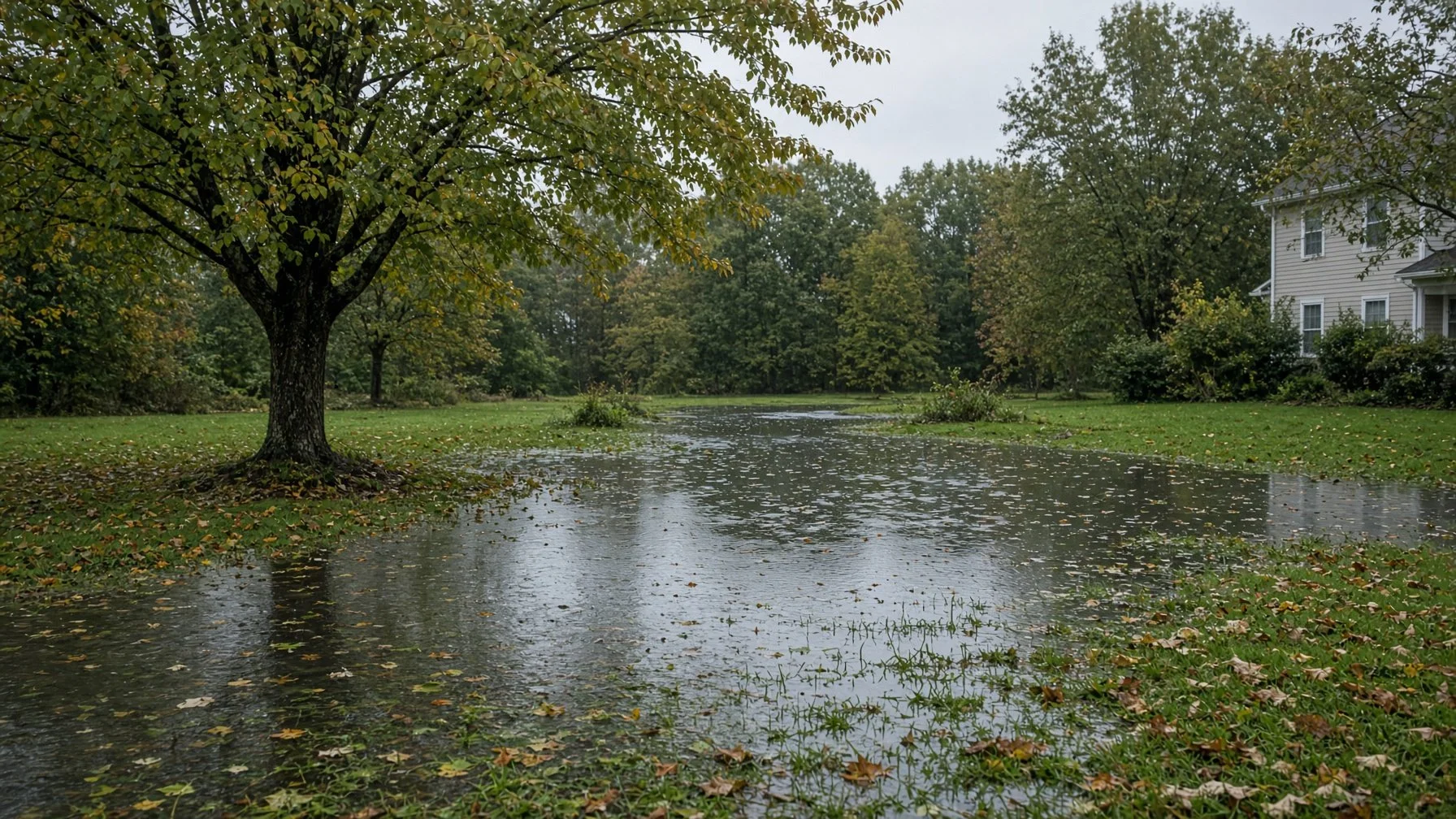
Working wet clay is one of the fastest ways to make a bad week worse. When soil is saturated, a mower, an aerator, or even a heavy footstep smears the surface, packs the pores shut, and leaves ruts that hold the next rain.
A simple test: walk the lawn. If your shoe prints shine with water or the soil ribbons instead of crumbling, stay off it. Give it another dry day. Cool-season grass can sit a little longer. Compacted mud cannot undo itself.
If water is still pooled in a low corner, that is a drainage question, not a seed question. Note those spots. Do not dump fill over living grass just to hide a puddle. Once the surface firms up, you can decide whether a light regrade, a soil test, or simply living with a wet pocket is the honest answer for that yard.
Walk the lawn before you buy a bag of anything
When you can walk without sinking, take a slow lap and sort the damage into three piles.
• Debris and silt. Leaves, sticks, trash, and a film of mud on the blades. Cool-season grass can often push through a thin coat of silt once light and air reach the crown again. A thicker layer — roughly an inch or more sitting on top of the turf — can smother it. Rake or broom light silt off when it is no longer soup. Do not till a silt layer into the lawn; that creates a sealed cap that sheds water later.
• Grass that is flattened but still green at the crown. Lawns that were under water for hours, not days, often look worse than they are. Give them sun and air. Lift matted patches with a rake so light can get in. Do not scalp them.
• Grass that stayed submerged for several days, or that is yellow-brown with no green at the crown. Those patches may not recover. Mark them. Fall is still a good window to reseed once the soil is workable — but only if you can keep the seedbed from sitting in another pond.
Floodwater can carry more than mud. Wear gloves when you clean up. Keep children and pets off standing water and fresh silt until it has dried and been raked. If a well, septic system, or oil tank was in the flood path, treat that as a safety issue first and a lawn issue second.
Mow high — and dry
Once the surface firms up, mow. Set the deck at about three inches for the tall fescue, Kentucky bluegrass, and ryegrass lawns that are common here. Taller grass shades the soil, cools the crown, and helps the plant put energy into roots before a typical Mid-Ohio Valley first frost in mid-to-late October.
Never take off more than a third of the blade in one pass. If the lawn got away from you during the storms, raise the deck, take a high cut, then come back a few days later. Leave clippings if they are short and dry. Rake heavy, wet mats so they do not smother the crown or feed disease.
A dull blade tears wet grass and invites fungus. Sharpen before you start. After a month like this one, that small habit matters.
Hold the fertilizer and the seed
Fall feeding is still the most useful fertilizer pass of the year for cool-season turf. Roots grow in September and October while the top growth slows. A moderate application — following the bag rate, not a heavier “catch-up” dose — helps the plant store energy for winter and green up next spring.
Do not put fertilizer on a soggy lawn, and do not put it down if another washout is in the forecast. Nutrients that run off the yard do the river no favors and do the grass no good. Wait for a stretch when the soil is moist but not saturated, then water the product in with a light rain or a brief watering.
The same rule applies to seed. Late August through mid-October is the usual window in this region for overseeding tall fescue and bluegrass mixes. Warm soil and cooler nights help seed germinate with less weed pressure than spring. We are late in that window now. If a dry stretch opens in the next couple of weeks, thin spots can still be scratched and seeded. If the ground stays wet, it is better to wait for spring than to drown a new seeding.
Match seed to what you already have. Tall fescue lawns get tall fescue. Bluegrass lawns get a bluegrass mix. Mixing types on a whim makes mowing and watering harder later.
Good seed-to-soil contact is the whole game. Rake thin spots so seed touches mineral soil. If the ground is firm enough for a core aerator, those holes are a fine place for seed to land. Lightly rake, then keep the surface damp — not flooded — until the seedlings take.
Aeration helps. Wet clay does not.
Core aeration is one of the best fall jobs on compacted Mid-Ohio Valley clay, especially after traffic and standing water. Hollow tines pull plugs, open the soil, and let air and water move again.
Do it only when the soil is moist enough for the tines to pull a plug and dry enough that the machine is not smearing a paste. If the cores come out as shiny mud ribbons, stop. Try again after a dry day or two. Leave the plugs on the lawn; they break down and help the surface.
Skip power raking or heavy dethatching on a stressed, wet lawn. You will tear more crown than thatch. A light rake to lift matted grass is enough for now.
Watch for disease, not just bare dirt
Warm days, cool nights, and a lawn that never quite dries are a recipe for leaf spot and other wet-weather fungi. You may see thinning, brown patches, or a greasy look to the blades.
The practical response is cultural, not a shopping list of sprays. Mow high with a sharp blade. Improve air movement by clearing debris. Do not water in the evening if the soil is already wet. Avoid a heavy nitrogen punch on a sick lawn. If a patch keeps spreading after the weather settles, that is a good time to ask someone at the market or your county Extension office what they are seeing this year.
A soil test is more useful than a guess
Flood silt can change the surface you are growing in — texture, pH, and nutrients. A soil test from WVU Extension or OSU Extension is the cheapest way to know whether lime, phosphorus, or nothing extra is actually needed. Fall and winter are a fine time to sample. Lime works slowly; if the test calls for it, fall is when you want it on the ground.
You do not have to fix the whole yard in one Saturday. Test first. Then decide what the lawn actually asked for.
A simple order of work for the next few weeks
• Stay off the soggy parts.
• Pick up debris. Rake or broom light silt once it is no longer liquid.
• Mow high with a sharp blade when the surface is firm.
• Mark dead patches and low spots that hold water.
• On a dry stretch: core-aerate compacted ground, overseed thin areas if you still have time before mid-October, and fertilize at the labeled rate.
• Send a soil sample if you have not tested in a few years.
• If the calendar runs out on you, stop. A rushed, wet seeding in late October is a weaker bet than a planned spring repair.
First frost here is typically mid-to-late October and depends on your hillside, hollow, or river-bottom spot. New seedlings need time before that. Existing turf that is merely tired will keep working as long as you do not bury it, scalp it, or pack it.