Mulch, Protect, Prepare
October in the Mid-Ohio Valley is the month the garden starts to button up. Typical first frost still lands mid-to-late October around Mason, Gallipolis, Belpre, and the river towns between them—confirm your own hillside, hollow, or bottomland, because the Ohio River valley loves a microclimate. The work shifts from keeping things producing to putting the beds to bed. Mulch the soil, protect what needs shelter, and prepare so spring arrives a little easier. This is practical, neighbor-to-neighbor advice for Zone 6a–6b gardens. It is not a guarantee that every plant will sail through winter untouched.
Mulch
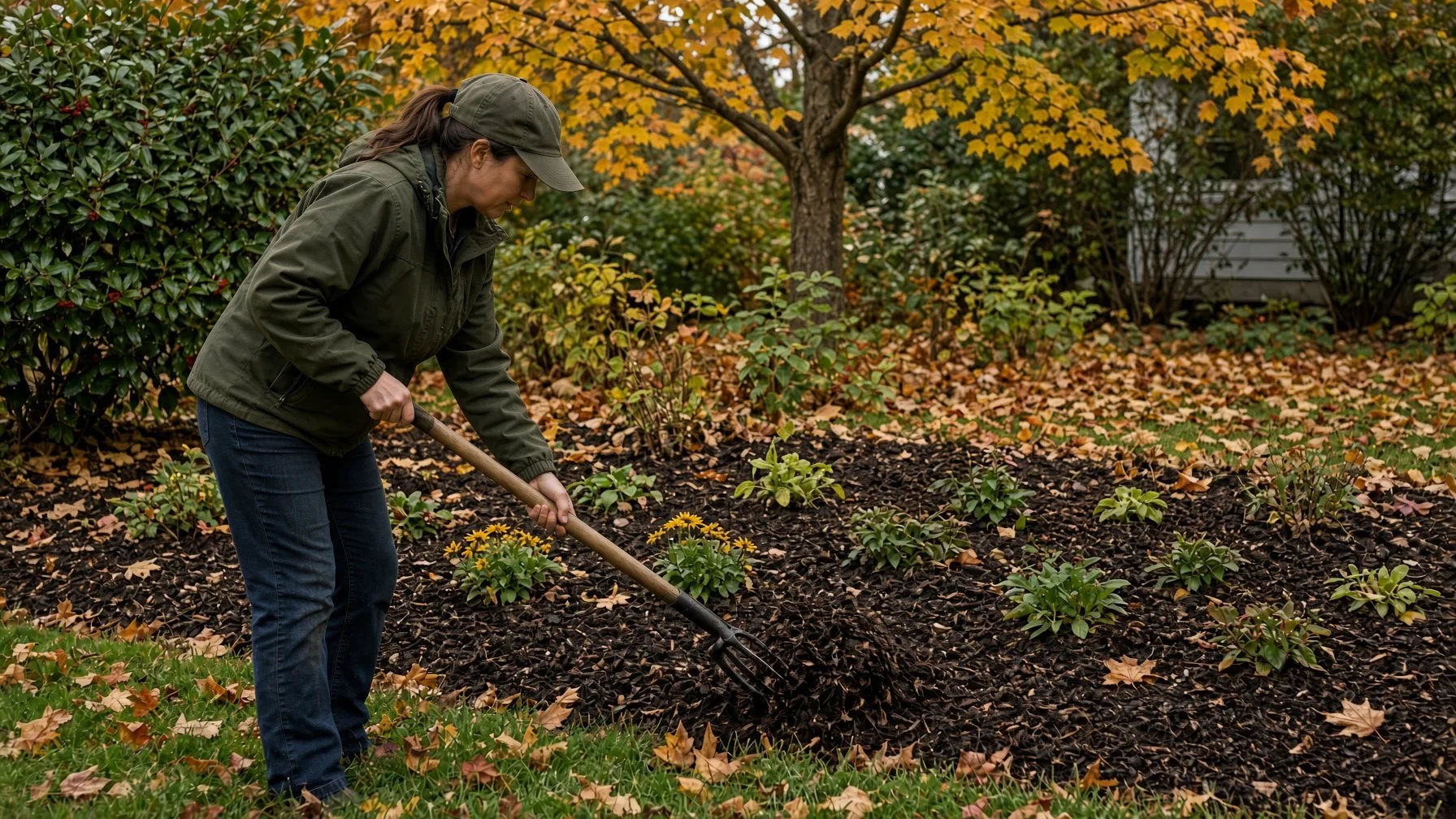
A good layer of organic mulch is one of the kindest things you can do for perennial beds, trees, shrubs, and even empty vegetable rows once the soil has cooled. It moderates temperature swings, holds moisture, and keeps freeze-thaw cycles from heaving roots right out of the ground. Wait until the soil has cooled and a light frost has already visited—usually late October into November around here. Mulching while the soil is still warm can keep it too cozy and invite late growth or rodents.
Aim for two to four inches of shredded leaves, straw, compost, or wood chips. Pull the mulch back a few inches from the crowns of perennials and the trunks of trees and shrubs so moisture does not sit against the plant and invite rot. In vegetable beds that are finished for the year, a light mulch or a cover crop still protects the soil from winter rain and erosion. Leave some bare soil only where you still plan to plant garlic or spring bulbs if those jobs are not already done.
Protect
Not every plant needs the same kind of winter cover. Hardy perennials that are already established in Zone 6 usually do fine with the mulch described above once they have gone dormant. Tender perennials, tropicals, and anything you grew in a pot that is not hardy here needs a different plan. Dig and store cannas, dahlias, and gladiolus if you have not already. Bring houseplants and tender herbs indoors after a careful pest check. For borderline plants, a simple frost cloth or row cover on cold nights can buy time, but do not leave plastic sitting tight against foliage.
Young trees and shrubs planted this fall still need water until the ground freezes. A trunk wrap or a simple wire cage can protect thin bark from sunscald and from rabbits or deer that get hungrier once other forage disappears. Keep the mulch off the trunk. If a hard freeze is in the forecast and you have containers you cannot move, group them together in a sheltered spot and wrap the pots. Water them once more before the cold settles in so the roots are not sitting dry.
Prepare
Cleanup is part of preparation, but it does not have to be perfect. Remove diseased plant material so problems do not overwinter in the bed. Healthy stems and seed heads can stay for birds and beneficial insects if you like the look. Turn the compost pile one more time while the weather is still workable. Take a soil test if you have not done one in a few years—fall is a good window so you know what the beds will need next spring.
If garlic is not already in the ground, mid-to-late October is still workable in most of the Mid-Ohio Valley as long as the soil is not frozen or waterlogged. Spring-blooming bulbs should go in before the ground locks up. Empty beds can take a cover crop such as winter rye or a light layer of leaves. Write down what worked and what struggled this year while the memory is fresh. That short note is worth more than any catalog when you start planning in January.
Tools deserve a little attention too. Clean soil off shovels and pruners, sharpen blades, and oil metal so it does not rust while it sits. A tidy shed in October is a quiet gift to yourself in March.
None of this is complicated. It is the same work everyone with a home garden has done for decades—mulch the soil, protect what is tender, and prepare so the next season starts with less catch-up. The garden is not done with you, and you are not done with it.