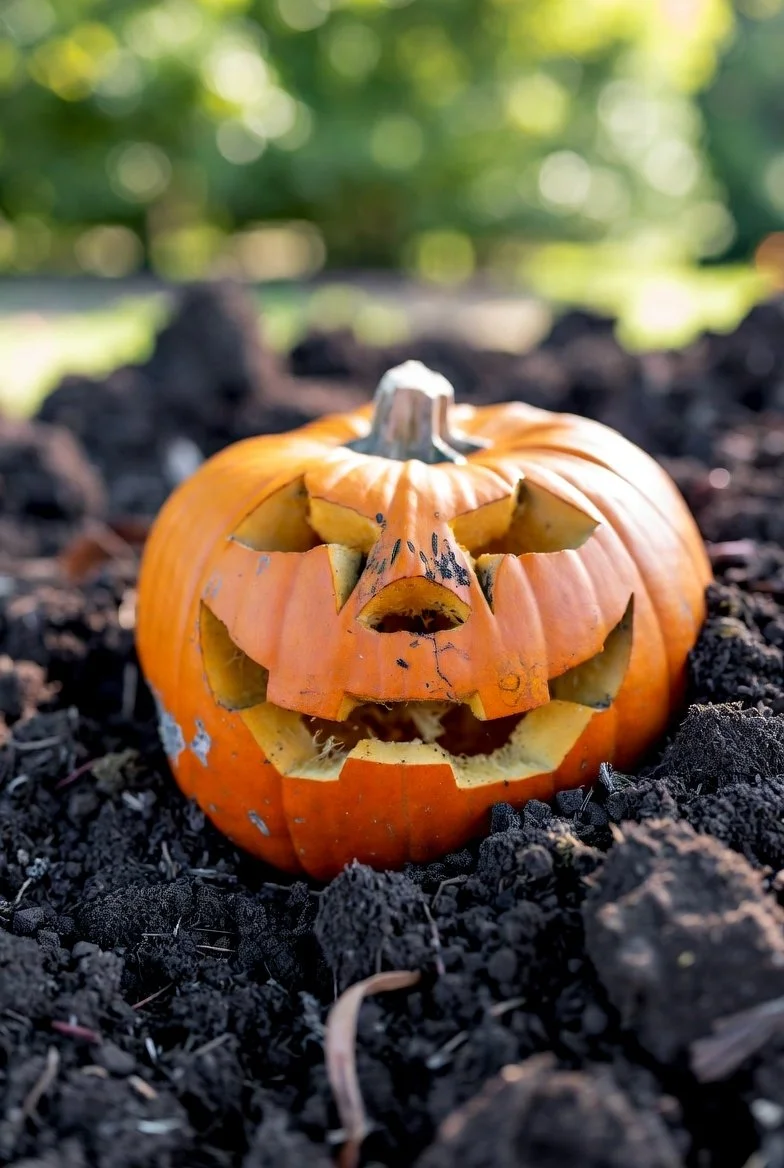
Composting Your Pumpkins
As Halloween wraps up and your jack-o’-lantern’s toothy grin starts to sag, don’t toss it in the trash! Composting your pumpkin is an eco-friendly way to give it a second life while enriching your garden. Here’s how to turn your spooky masterpiece into nutrient-rich compost, plus a few tips to make the process as smooth as a witch’s brew.
Why Compost Your Jack-o’-Lantern?
Every year, millions of pumpkins end up in landfills after Halloween, where they release methane—a potent greenhouse gas—as they decompose. Composting, on the other hand, transforms your jack-o’-lantern into valuable organic matter that nourishes soil, supports plant growth, and reduces waste. According to the EPA, composting can divert up to 30% of household waste from landfills. Plus, it’s a fun, sustainable way to close the loop on your Halloween festivities!

Step-by-Step Guide to Composting Your Pumpkin
1. Prepare Your Pumpkin
Remove Non-Compostable Items: Scrape off any candle wax, remove plastic decorations, or peel away paint or glitter. These don’t break down in compost and can harm the environment.
Clean Out the Guts: If you haven’t already, scoop out the seeds and stringy bits. (Pro tip: Save the seeds for roasting or planting next year!)
Smash It Up: Break the pumpkin into smaller pieces to speed up decomposition. A shovel or hammer works great, and it’s a fun way to let out some post-Halloween energy.
2. Choose Your Composting Method
Backyard Compost Bin or Pile: Add the pumpkin pieces to your compost pile, mixing them with “browns” (like dry leaves or cardboard) and “greens” (like grass clippings or food scraps). Aim for a 3:1 ratio of browns to greens for optimal decomposition.
Vermicomposting: If you use a worm bin, pumpkins can work, but go easy—too much pumpkin can overwhelm worms or create a slimy mess.
Community Composting: No backyard? Check for local drop-off sites or community gardens that accept food scraps. Many cities, like San Francisco and Seattle, have robust composting programs.
3. Mix and Maintain
Bury the pumpkin pieces in the center of your compost pile to deter pests and speed up breakdown.
Turn your compost regularly to aerate it, ensuring faster decomposition. Pumpkins are high in water and nitrogen, so they break down quickly—often within a few weeks to a couple of months.
Keep the pile moist (like a wrung-out sponge) but not soggy.
4. Use Your Compost
Once your pumpkin has fully decomposed (usually 2-6 months, depending on conditions), you’ll have rich, dark compost ready to nourish your garden, potted plants, or lawn.
Tips for Composting Success
Avoid Moldy Pumpkins: If your jack-o’-lantern is already a moldy mess, it’s still compostable, but monitor for pests, as mold can attract critters.
Balance the Pile: Pumpkins are “green” material, so pair them with plenty of “browns” to avoid a smelly, overly wet pile.
Check Local Rules: Some areas have specific guidelines for composting food scraps, especially if you’re using a municipal program.
Get Creative: If you’re feeling crafty, use your compost to grow next year’s pumpkins for a truly sustainable cycle!
Bonus: Fun Pumpkin Composting Facts
Pumpkins are about 90% water, making them a great moisture source for your compost pile.
The average American household generates about 150 pounds of food waste annually—composting your pumpkin is a small but mighty step toward reducing that.
Some communities host “Pumpkin Smash” events where you can bring your jack-o’-lanterns to be composted collectively—check local event pages to find one near you!
Wrap-Up
Composting your jack-o’-lantern is a simple, sustainable way to keep the Halloween spirit alive in your garden. By following these steps, you’ll reduce waste, enrich your soil, and maybe even grow a few pumpkins for next year’s festivities. So, grab that sagging jack-o’-lantern, smash it up, and let it work its magic in your compost pile. Your garden will thank you!