Bringing the Outdoors In
The first frosts are teasing the Mid-Ohio Valley. Around Mason, Gallipolis, Belpre, and the river towns between them, we usually see that first hard freeze mid-to-late October—confirm your own hillside, hollow, or bottomland, because the Ohio River valley loves a microclimate. If you have tropicals, tender herbs, or houseplants that spent the summer outside, now is the time to give them a soft landing indoors.
This is not about turning every pot into a permanent houseplant. It is about helping the ones that cannot take a Zone 6 winter stay healthy until they can go back outside next spring. Here is a practical way to make the move, which plants usually make good candidates, and how to handle the dry air that comes with indoor heat.
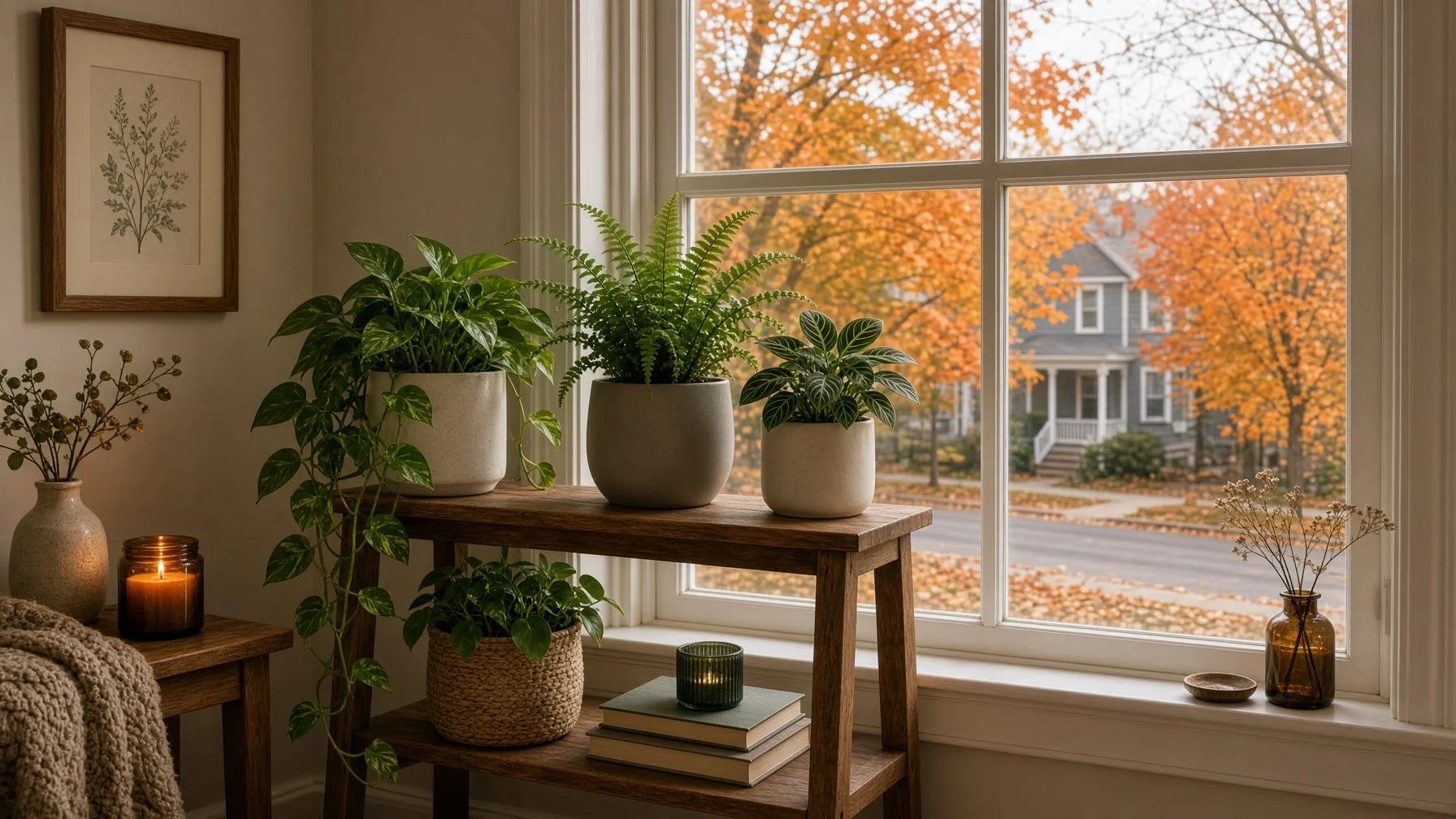
Good Candidates for Indoor Overwintering
Start with plants that are truly tender here. Tropical hibiscus, mandevilla, ferns (if you’re adventurous), and many of the flowering annuals we grow in containers will not survive a freeze. Rosemary, bay laurel, and some other Mediterranean herbs often come through indoors if they get enough light. Succulents and cacti that lived outside all summer usually transition well if you keep them on the dry side.
True houseplants that summered on the porch or patio are also ready to come back in. Most hardy perennials and shrubs that are already in the ground or in large containers meant to stay outside should remain outside—they need the cold to rest properly. When in doubt, think about where the plant came from. If it would not be happy in a Zone 6 garden without protection, it is a candidate for the house.
How to Transition Them Indoors
Do not bring a plant straight from full outdoor sun into a warm living room. The sudden change in light, temperature, and humidity is hard on leaves.
Inspect carefully. Look under leaves and along stems for aphids, spider mites, whiteflies, or scale. A strong spray of water, insecticidal soap, or neem oil (follow the label) can help. Isolate new arrivals for a week or two if you can. A well lit garage can be a great quarantine and temperature transition zone.
Clean and prune. Remove yellow or damaged leaves. Cut back leggy growth so the plant is a more manageable size and so less leaf area has to adjust to lower light. Wipe the pot and saucer.
Acclimate. Move the plant to a shadier outdoor spot for several days. Then begin bringing it inside at night and back out during the day, lengthening the indoor time over a week. Once nights drop to freezing, keep it in.
Choose the right spot. Bright, south- or west-facing windows are best. Rotate the pot every few days so growth stays even. If natural light is limited, a simple grow light can help prevent stretching.
Dealing with Dry Indoor Air
Furnaces and wood stoves pull moisture out of the air. Many plants show brown leaf tips or edges when humidity drops.
Group plants together so they create a little pocket of higher humidity. Set pots on trays filled with pebbles and water—keep the bottom of the pot above the waterline so roots do not sit in standing water. A small humidifier near the plant area works well, especially for tropicals and ferns. Avoid placing plants directly over or next to heat vents or radiators. Misting can give a short boost, but it does not replace the other methods and can sometimes encourage leaf issues if water sits too long.
Water less often once plants are inside. Growth slows with shorter days, so soil stays moist longer. Check with a finger before you water. Most plants do not need fertilizer through the darkest months; resume at half strength when days lengthen and you see new growth.
A Few Extra Notes
Expect some leaf drop as plants adjust. That is normal. Watch for pests that may appear later—dry air and warm rooms can favor spider mites. Keep an eye on the soil and the leaves, and you will usually catch problems early.
If you have questions about a specific plant, bring a photo or a leaf sample the next time you stop by one of the Bob’s Market locations in Mason, Gallipolis, or Belpre. Our team is happy to talk through what you are growing. In the meantime, check Uncle Jim’s Almanac for more Mid-Ohio Valley timing.