Smart Seed Shopping

Hey there, fellow green thumbs in the Mid-Ohio Valley! It's John Morgan here from Bob's Market and Greenhouses, and let's face it—January might be snowy with the upcoming storm, but our gardening brains are already blooming with ideas for spring. If you're anything like me, you've got seed catalogs piling up like unread Christmas cards, tempting you with pictures of veggies that look too perfect to be real. But before you hit "add to cart" on a dozen packs of heirloom tomatoes (guilty as charged last year), let's talk smart seed shopping. We'll keep it fun, practical, and yes, a tad wiser from past mistakes. After all, who wants to end up with a garden full of mystery squash that takes over like an uninvited guest?
1. Dig Out Those Dusty Notes from Last Season
Remember that garden journal you swore you'd keep up with? (Or was that just a napkin with scribbles?) Now's the time to unearth it! Flip through your notes on what thrived and what flopped. Did your zucchini produce enough to feed the neighborhood, or did those pesky bugs turn your beans into lace doilies? Jot down successes like that super-sweet corn or the herbs that actually survived your "minimal watering" phase. This little review session saves you from repeating blunders—like planting too many hot peppers when your family prefers mild everything. Pro tip: If your notes are MIA, start fresh this year with a cute notebook from our shop. It's educational and way more fun than scrolling through old phone photos of wilted plants.
2. Take Stock of Your Seed Stash
Before splurging on new packets, raid your own supply like a squirrel checking its acorns. Pull out those leftover envelopes from last year (or the year before— no judgment here). Sort them by type: veggies, herbs, flowers. Check expiration dates, but don't toss 'em just yet. You might have viable gems hiding in there! This inventory not only prevents duplicates (hello, three packs of basil I didn't need) but also sparks ideas. Oh, and while you're at it, organize them in a shoebox or one of our handy seed storage kits—because nothing says "I'm a serious gardener" like color-coded chaos control. … I store mine in a plastic container in our fridge.
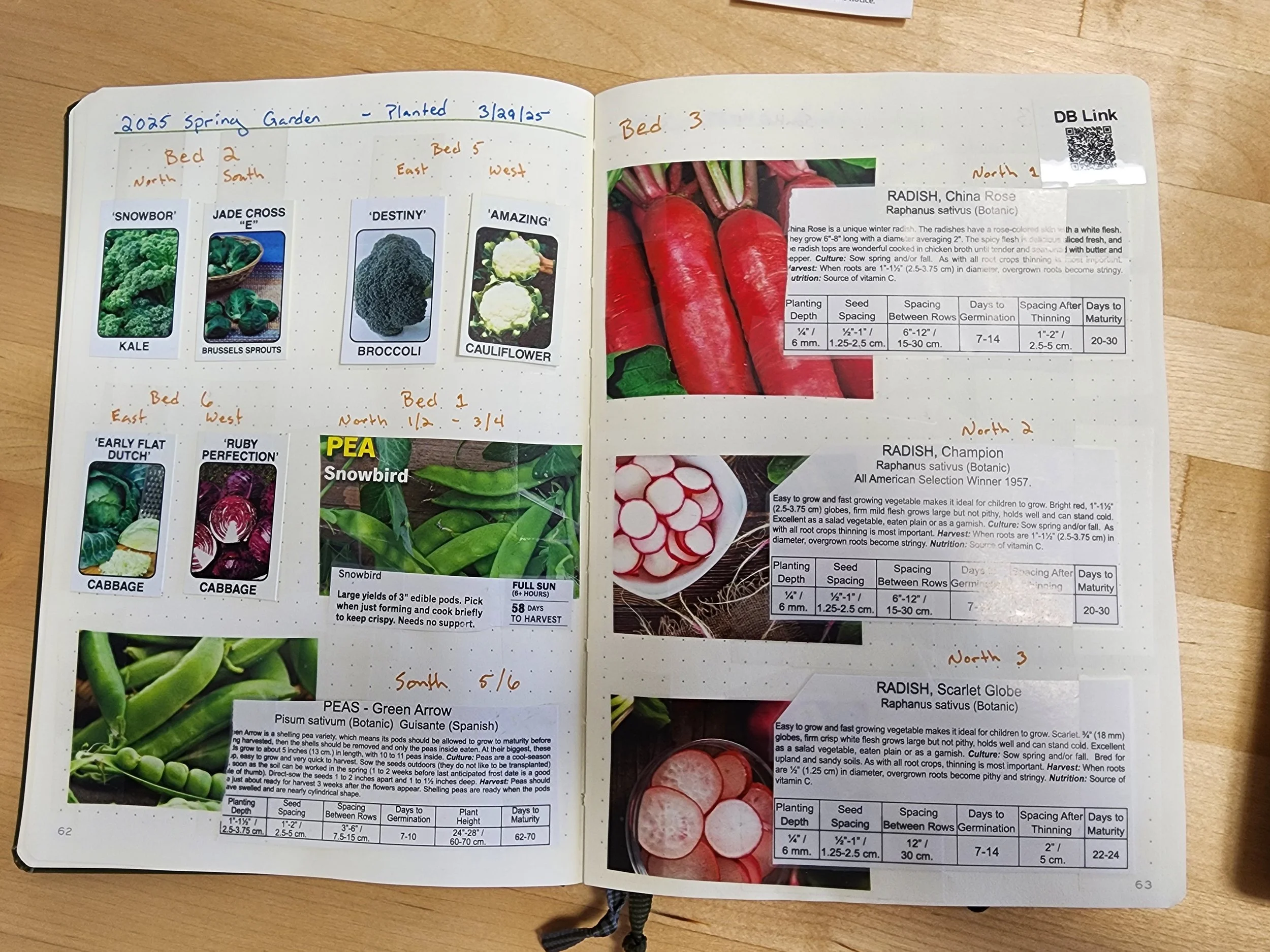
My 2025 Spring Garden Notes
3. Test Those Old Seeds for Life
Here's where the science gets fun (and a bit like a mini experiment from your kids' school days). Don't assume last year's surplus is still good—test their germination rate! Grab ten seeds from a pack, sandwich them between damp paper towels, and tuck them in a warm, dark spot. Keep 'em moist for a week or so, then count how many sprout. If only a couple pop up, you'll know to plant extras or skip 'em altogether. It's humorous how some seeds age like fine wine, while others... well, let's just say they retire early. This trick ensures your garden starts strong, not with a bunch of no-shows.
4. Think About What You Actually Eat (and Preserve)
Take a peek in your pantry, freezer, or that root cellar if you're fancy. What's stocked up from last harvest? If you're swimming in canned tomatoes but zero pickles, maybe prioritize cucumber seeds this time. This inventory helps tailor your seed order to your family's tastes— no more growing exotic veggies that end up as compost fodder. It's like meal planning for your garden: educational, efficient, and it keeps things from going to waste. Bonus: It might inspire you to try preserving more this year, turning your bounty into jams or sauces that wow at potlucks.
5. Shop Early and Wisely
The early bird gets the worm—or in this case, the best seed varieties! Catalogs and stores fill up fast, so browse now while options are plentiful. Look for seeds suited to our regional climate: think short-season varieties if you're in a frost-prone spot like countryside away from the microclimate of the Ohio River Valley. And hey, consider heirlooms for that old-school flavor punch, or hybrids for reliability.
There you have it, ladies and gentlemen—your roadmap to seed shopping that's smart, sustainable, and sprinkled with a little humor to thaw out these winter days. By starting with reflection and inventory, you'll plant a garden that's not just beautiful, but bountiful too. Got questions or need seeds? Pop into Bob's Market and Greenhouses—we're here to help your 2026 garden grow! What's your top seed tip? Share in the comments below.